Calligraphy Pavilion
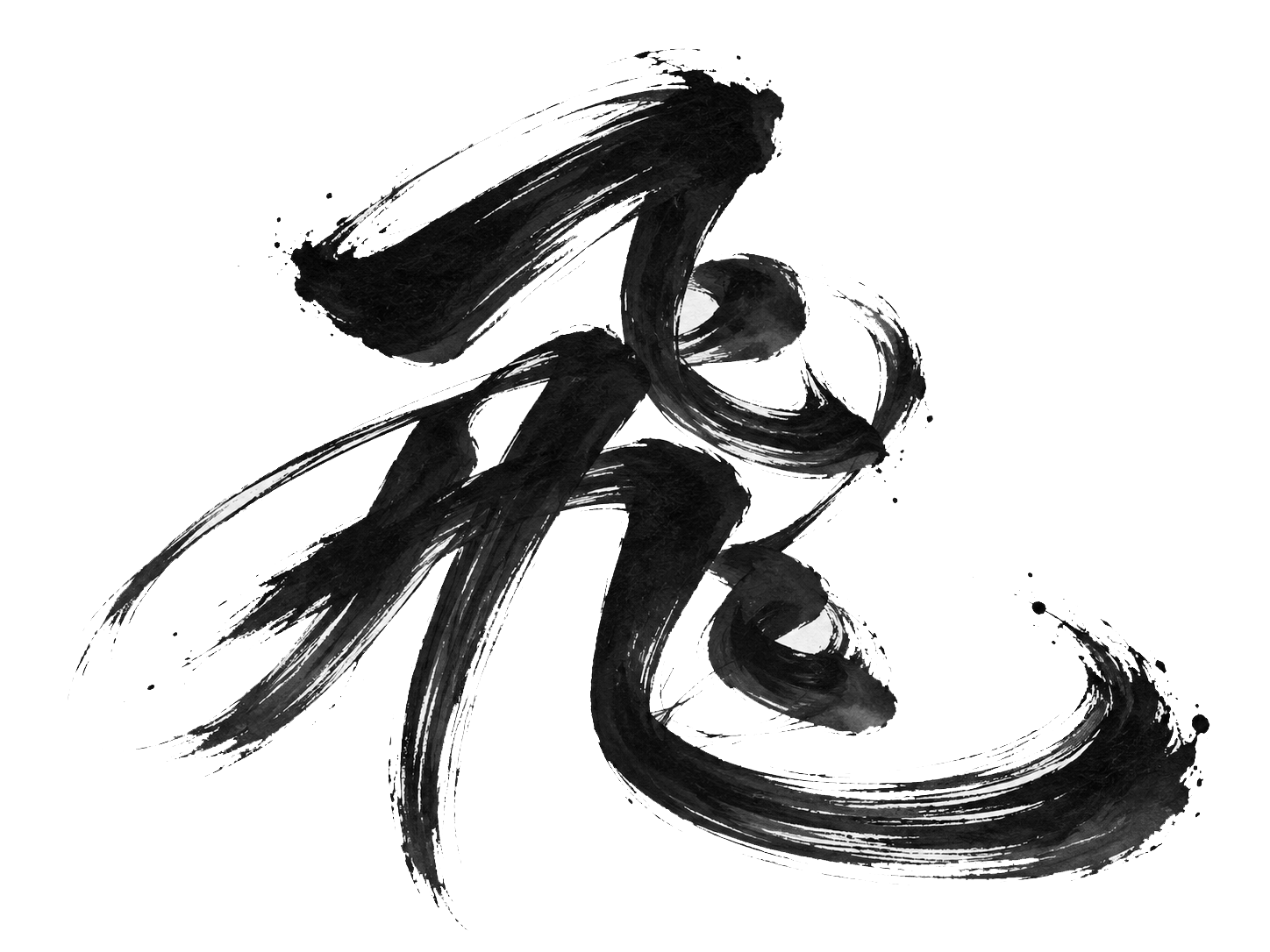
What makes Chinese cursive script beautiful is not how much the characters look like real things. It is the energy flowing between the strokes and the sense of movement in the writing. It uses fewer strokes and freer forms. One stroke often follows another, and the energy never stops. The brush moves light and heavy, fast and slow; lines run dry or wet, solid or open. Dry brush marks, thin linking lines, and turns all leave a sense of time. That sense of space written out is what I want to borrow for architecture.
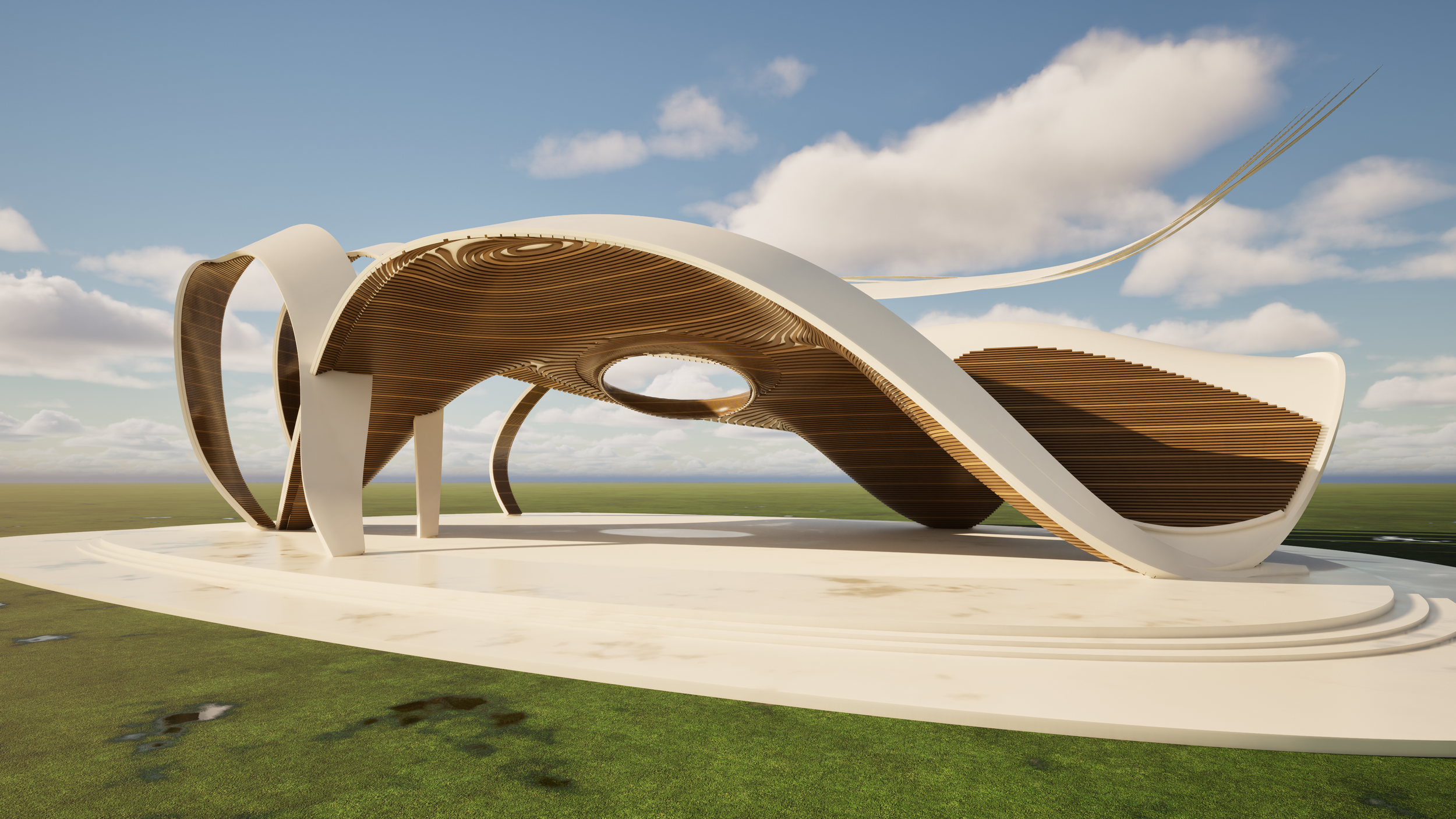
For this project, I used the cursive character “飞” (fly)as the starting point. I pulled out three brush movements: the upward lift, the turn and circle back, and the final stretch outward. Then I turned the movement and rhythm of the writing into architectural space.
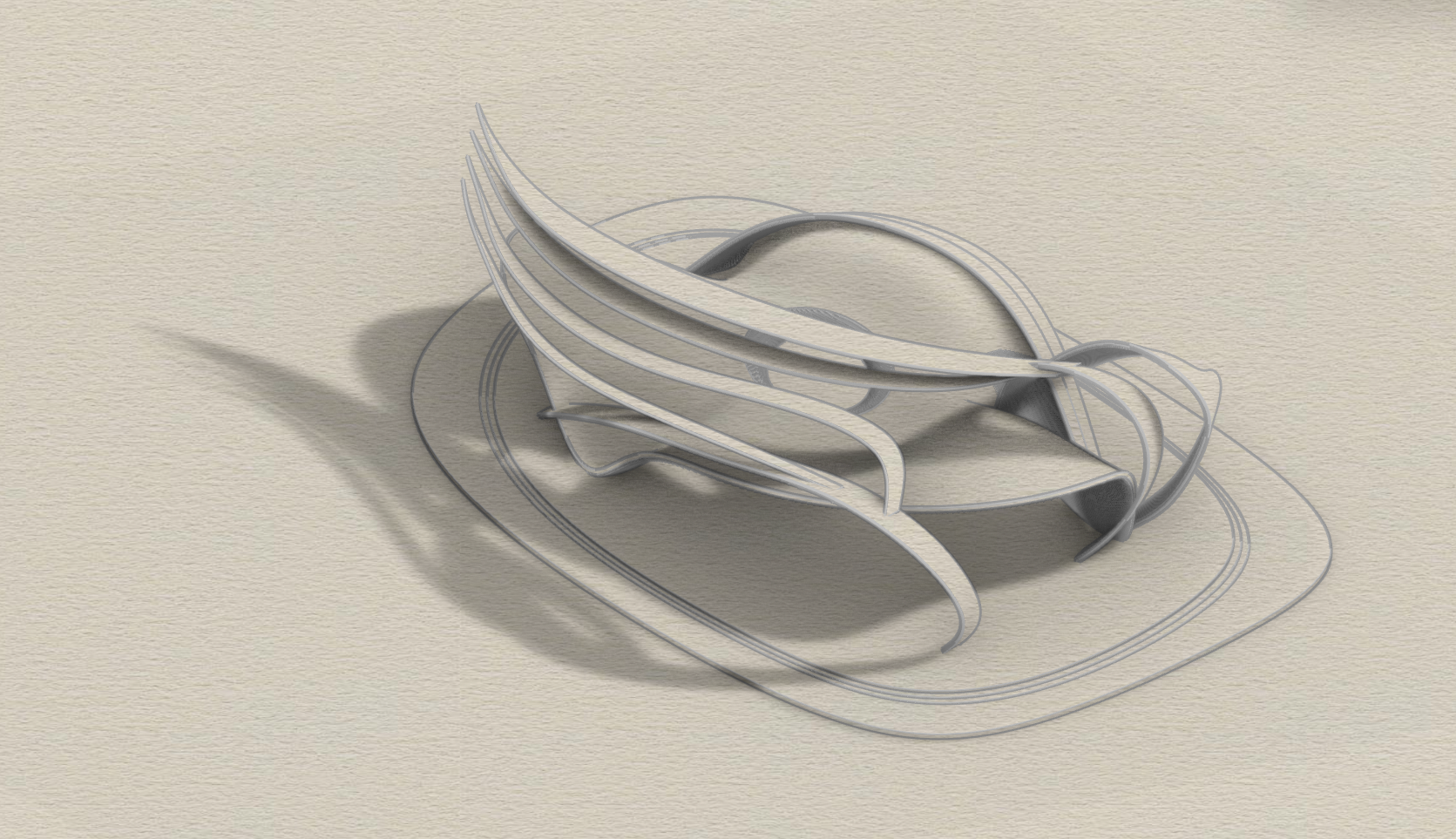
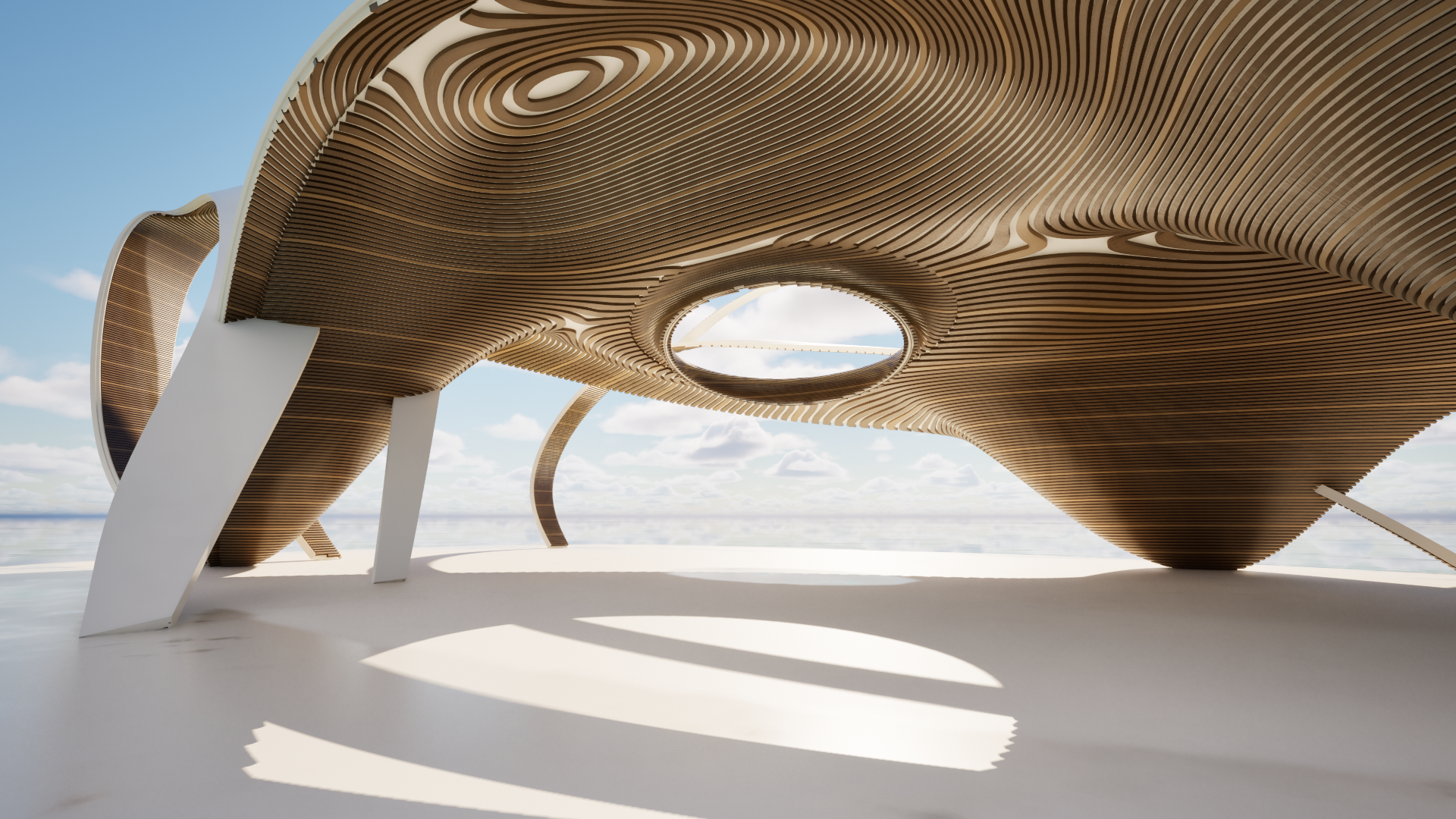
First, I turned the flowing curves in the strokes into control lines for making the space. The upward lift at the start sets the rising direction of the entrance arch. The turn and circle in the middle shape the central dome, which turns inward. The stretching final stroke extends into the roof wing. The spaces unfold from the entrance to the center, and then from the center out to the roof. For the space itself, I designed a rising entrance arch to guide people in, a circling central dome to gather views and activity, and a stretching roof wing to reach outward. This gives the pavilion a light, open feel.
Music Park
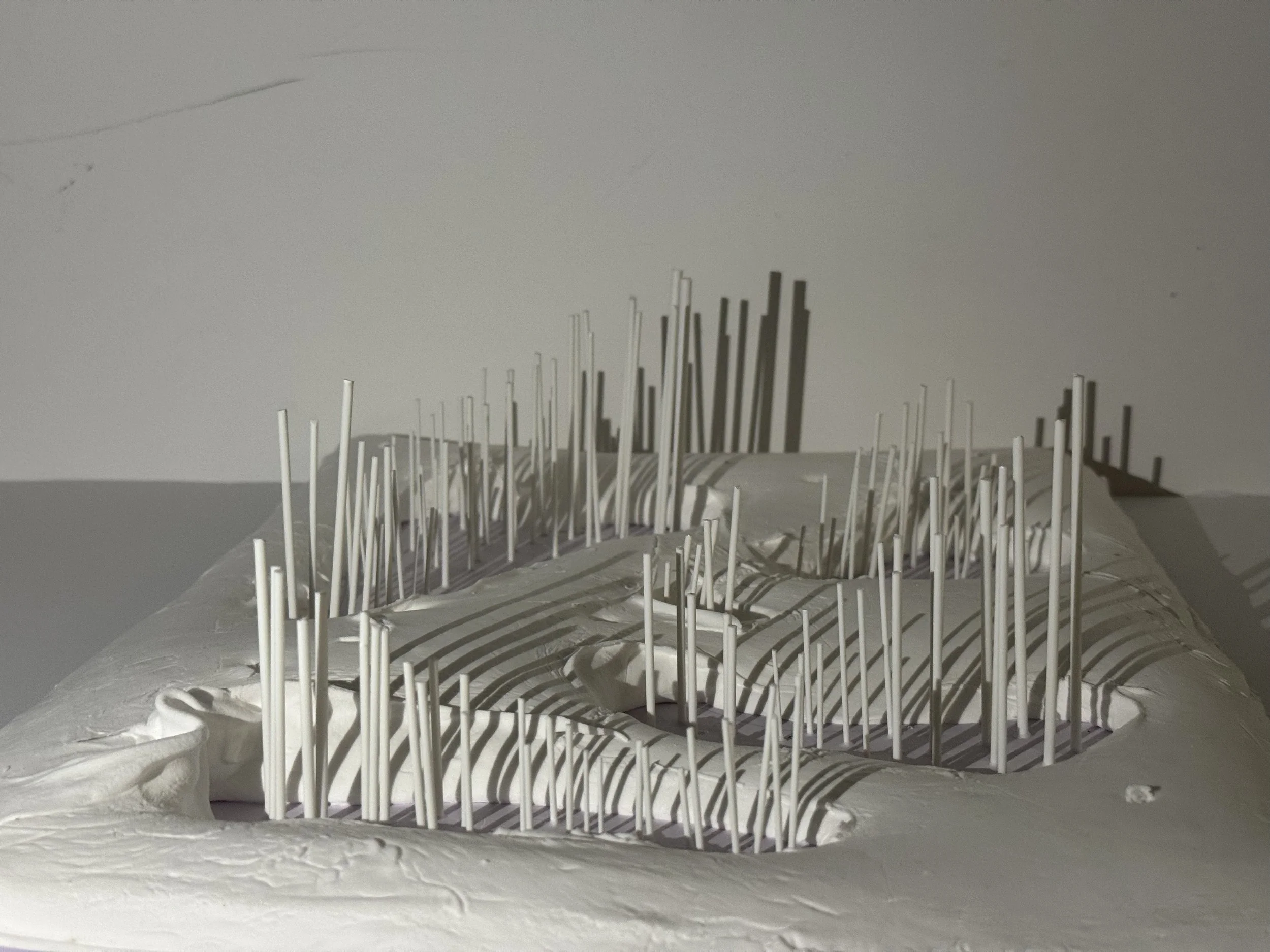
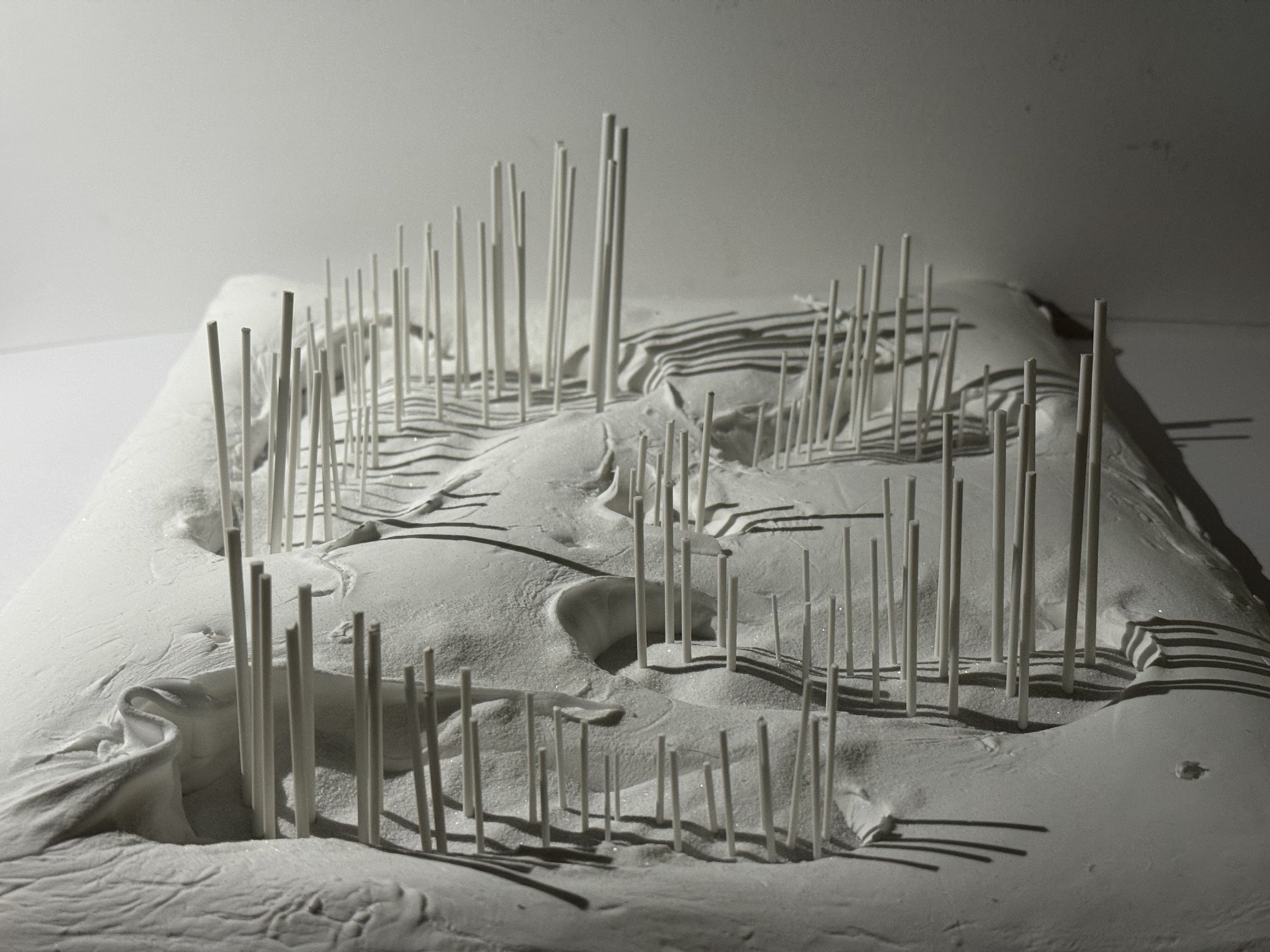
This project is inspired by Goethe’s famous saying, “Architecture is frozen music.” I wanted to use materials to turn the invisible rhythm, dynamics, and rise and fall of sound into a spatial sculpture that can be touched and felt. It is an attempt to translate listening experience into spatial materials. When viewers touch and observe it, they can feel how architecture and music share rhythm, density, and dynamics.
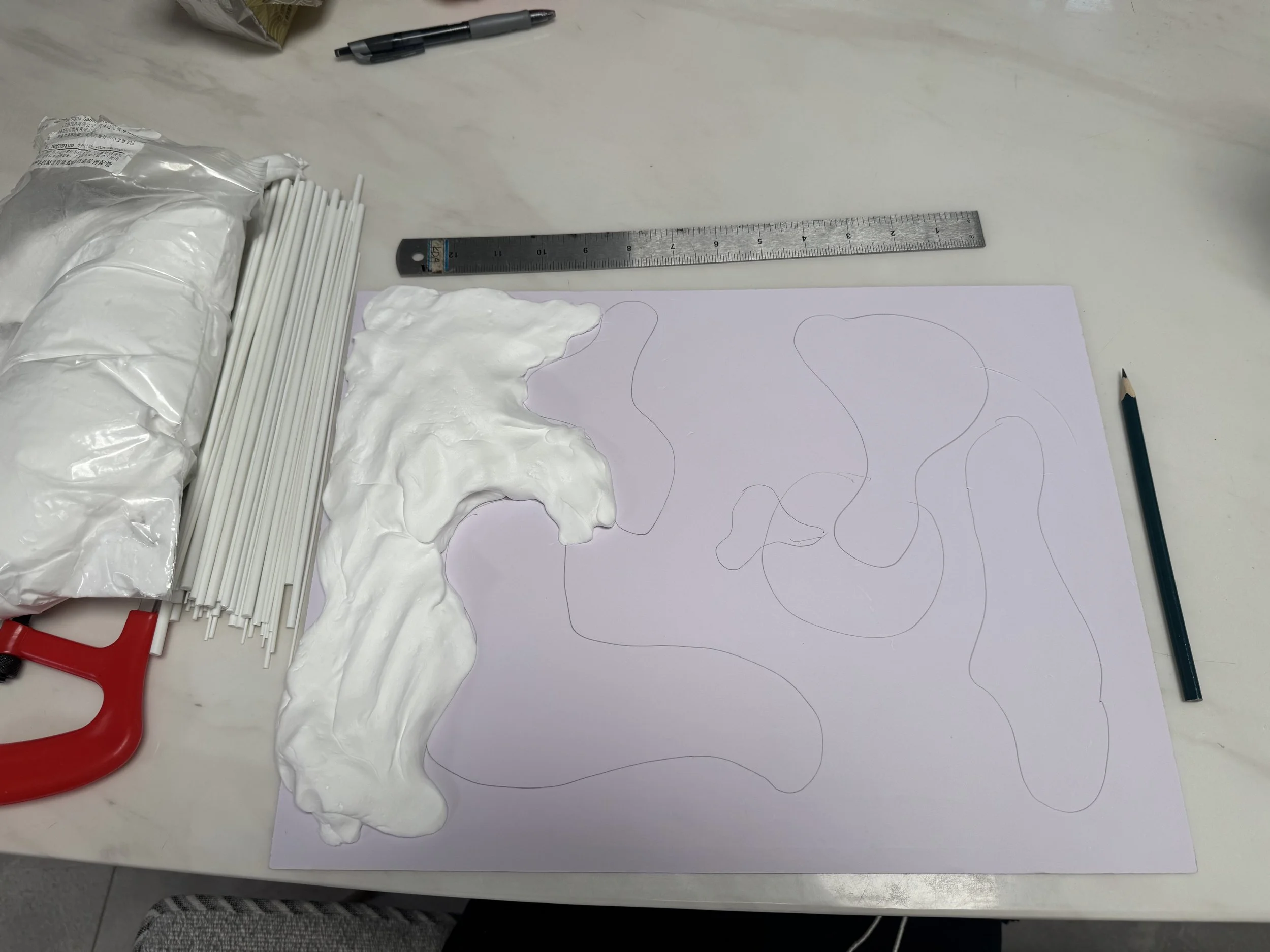
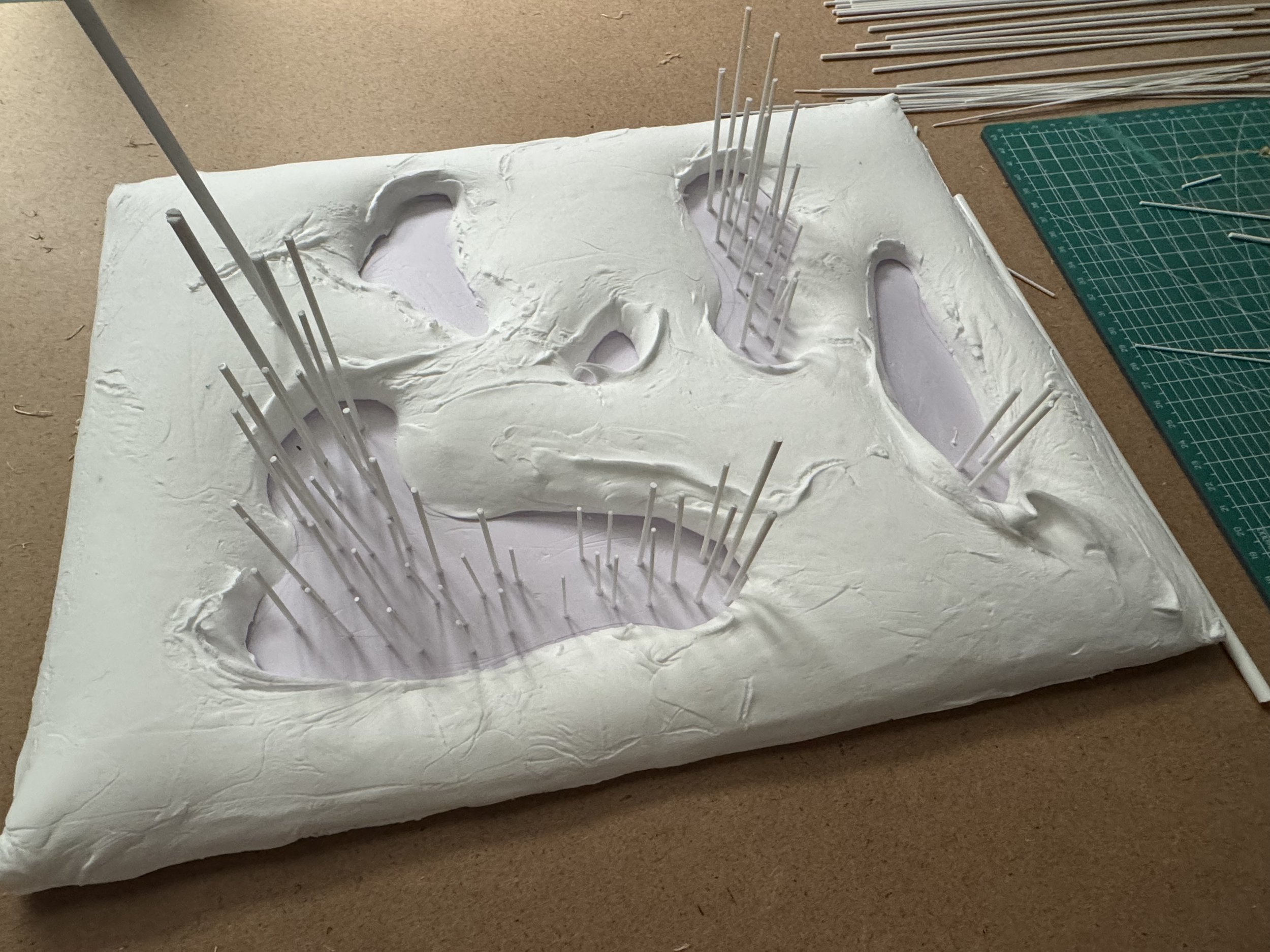
The site plan refers to the shapes of vibrating sound waves and spreading ripples, bringing the rises and falls of sound down to the ground. I used lightweight modeling clay to make the base, shaped into continuous curved surfaces that open and close.
I placed a series of plastic rods on the base, with gradual changes in length, spacing, and diameter. The spacing matches the loud and soft beats of music: dense areas are like fast, high phrases, while sparse areas are like slow, stretched melodies.
Then I added fine sand to the model. The rough clay, hard rods, and fine sand create contrasts between soft and hard, solid and empty, coarse and fine, adding more layers to the senses.