

Sharing Tables
—— A Graphic Ethnography of Food Culture in Penang, Malaysia
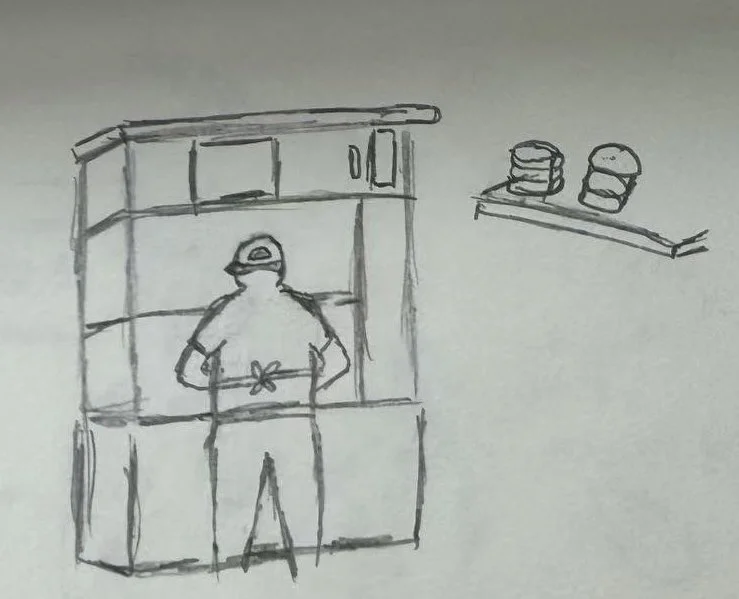
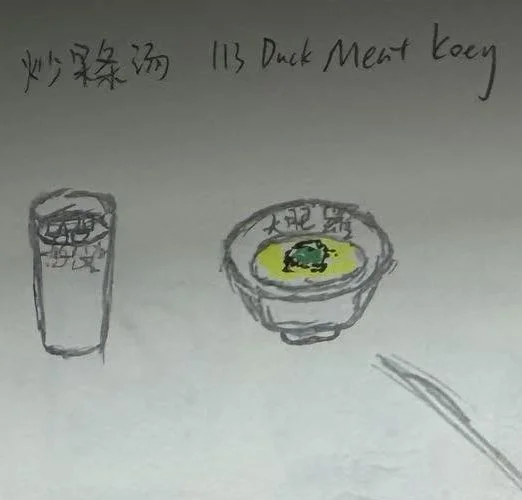
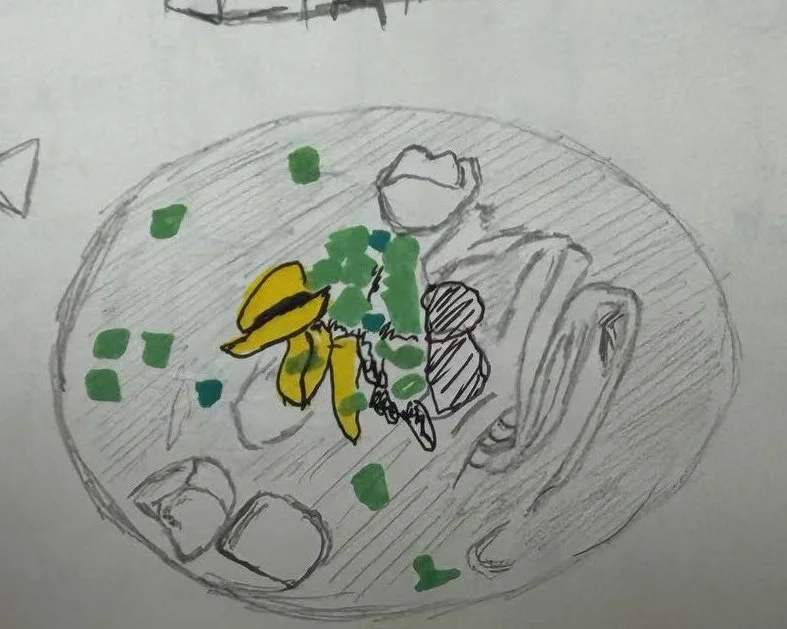
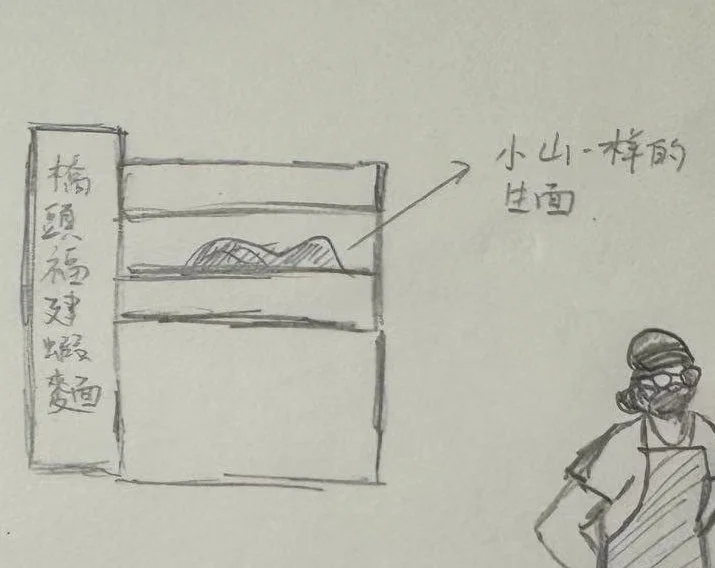
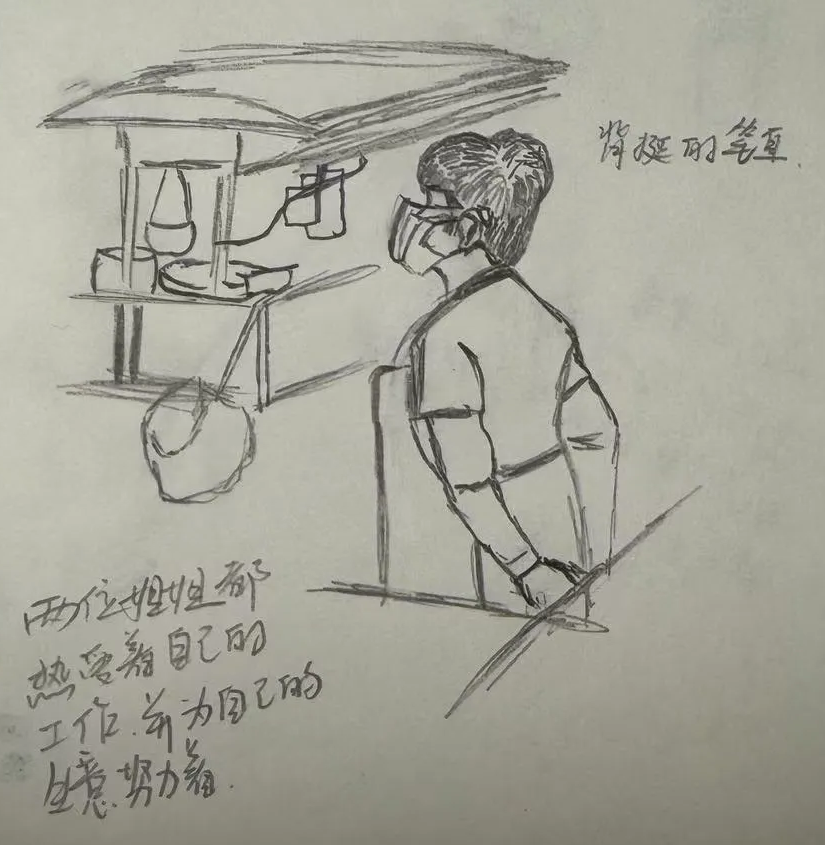
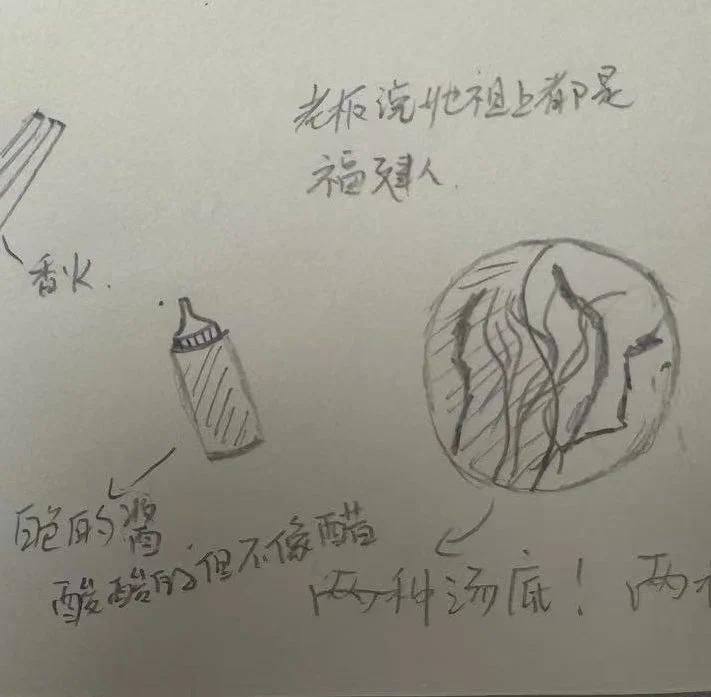
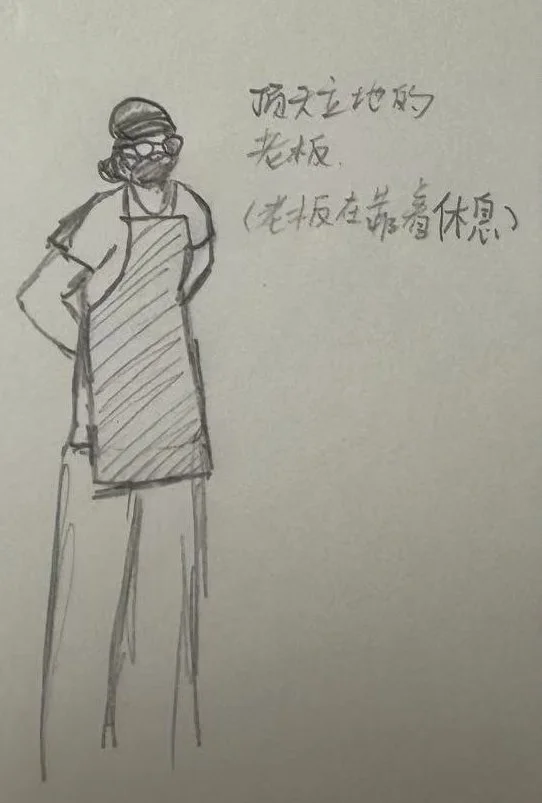
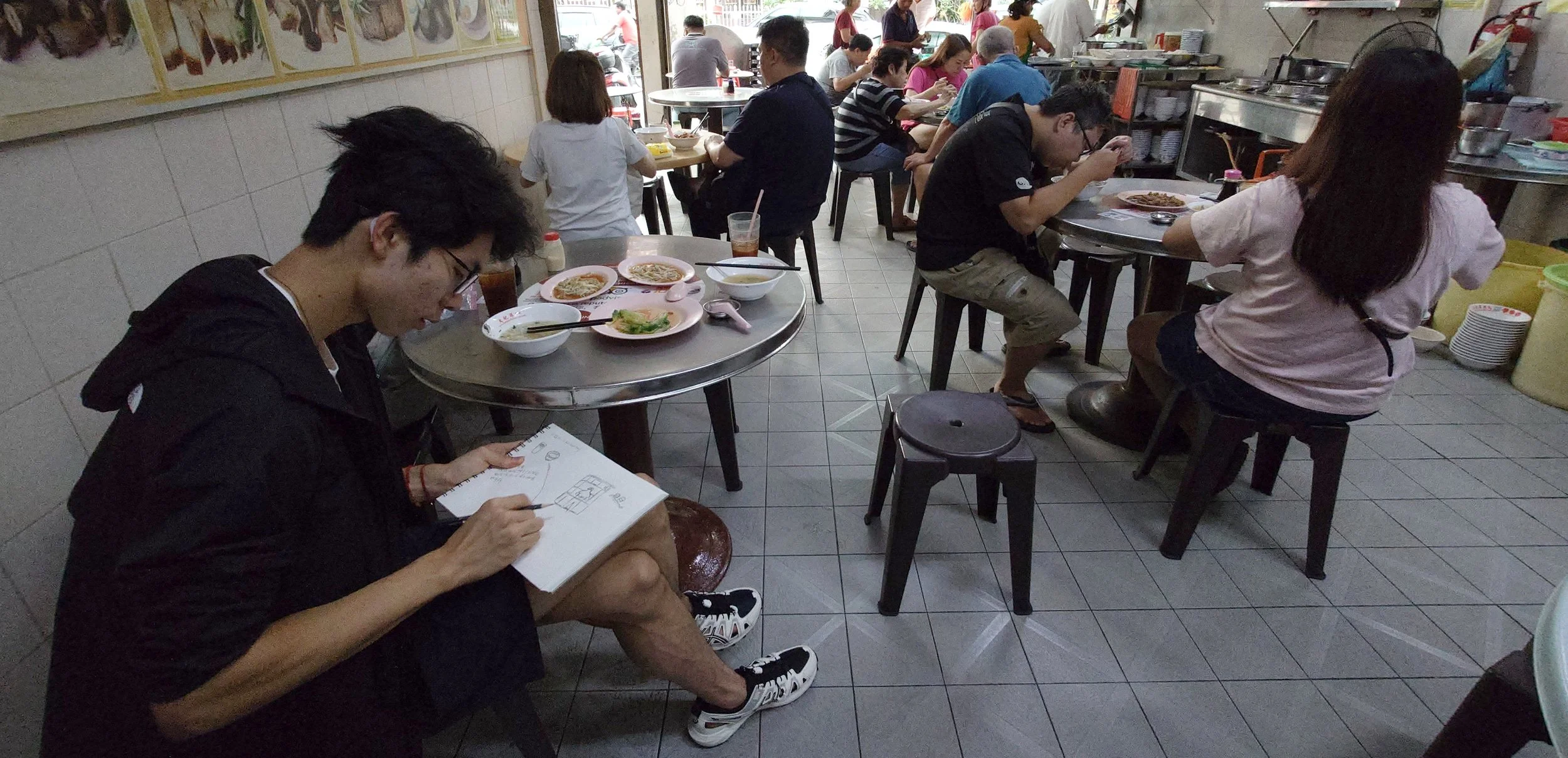
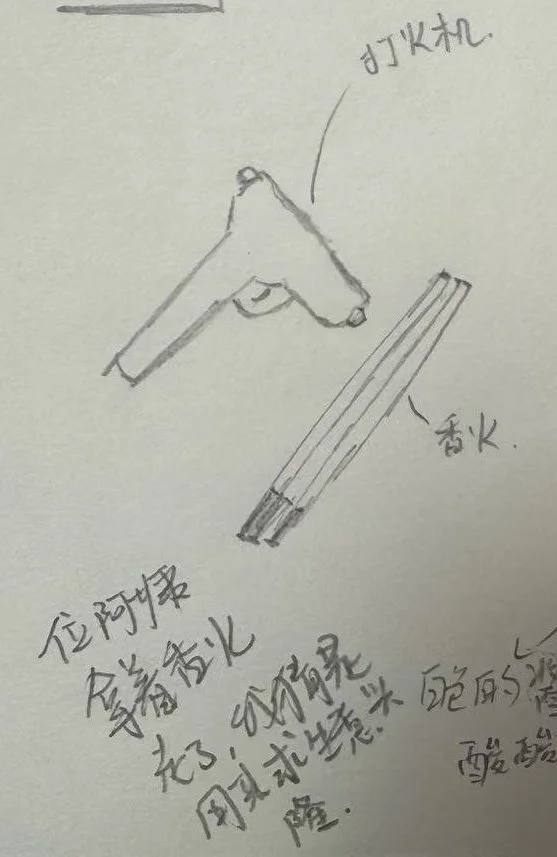
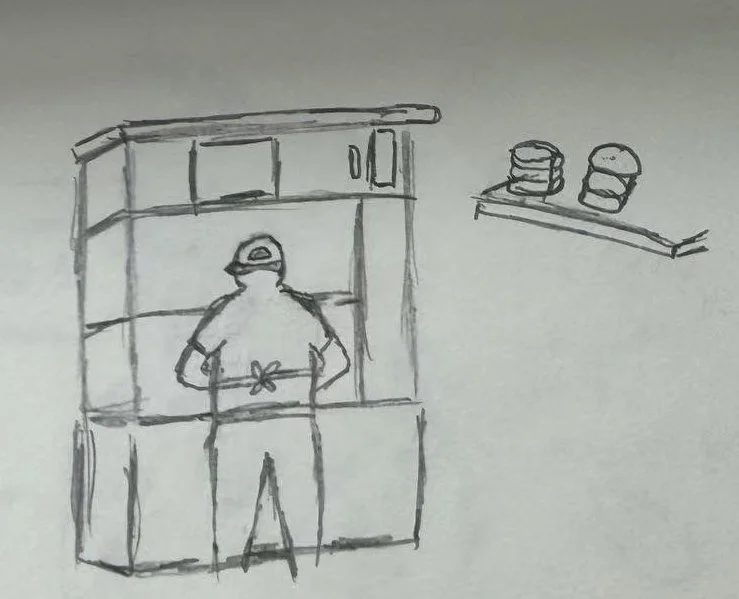
I went to Penang because I was interested in its food, but I wanted to do more than try dishes and decide which ones I liked. I brought a notebook to draw what I saw and write down conversations with locals. Some pages ended up mostly being pictures of meals. Others had vendors, signs, cooking equipment, and notes squeezed into the spaces around them.
Drawing took much longer than taking a photo. Sometimes that was inconvenient, especially when there was food in front of me. But it made me look more carefully. I had to pay attention to how things were arranged in a bowl and what was sitting around the counter. While drawing a vendor, I noticed their posture or how they stood when they weren’t serving someone.
My drawings helped me see things I probably would have neglected. A photo of a stall might remind me what it looked like. A drawing, with a few words beside it, could also remind me what I had been wondering about.
One thing I kept thinking about was how people named their food.
Before the trip, I would have been comfortable describing many of these dishes as “Chinese food.” But that wasn’t always the name people used. I encountered more specific labels: Hakka, Hainanese, Hokkien, Cantonese.
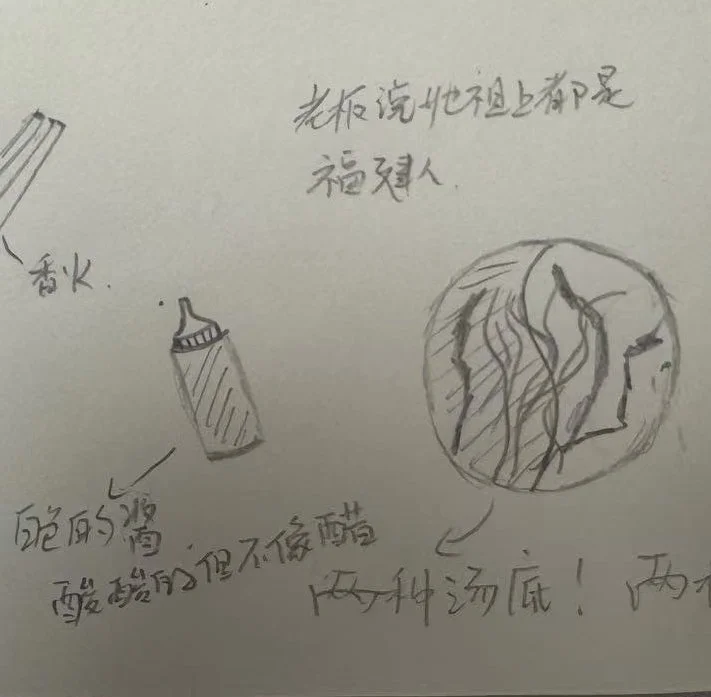
I’m used to thinking of these places and communities as parts of a larger China. That made me overlook how important the smaller identities could be. When the proprietor told me about their Fujian ancestry, I started to understand why a regional name might matter more than I had expected.
“Chinese food” was a convenient description for me. It didn’t tell me much about this particular person or their family.
I began to wonder what food meant to families who had moved away from their place of origin. A recipe was something they could bring with them and continue using. So was a familiar name. Even generations later, the food could give people a connection to somewhere they might never have lived themselves.
I don’t think every vendor was consciously trying to preserve a culture whenever they cooked. They were also running businesses and making a living. But perhaps that was part of why food could keep a memory going for so long. People had reasons to keep preparing it, eating it, and teaching someone else how to make it.
At the same time, these were food stalls in Penang, serving people who didn’t necessarily share the same ancestry. That interested me too. A dish could help one community remember its origins while giving other people a way to become familiar with it.
I started to see food as a way for communities to communicate with the people around them. You didn’t need to know a family’s whole history to order from their stall. But the name on the sign might make you curious, and a conversation could take you a little further. That was what happened to me.
The breakfast and coffee places gave me a different kind of question to think about.
At some of the places I visited, the person selling drinks controlled the shop and the tables, while other vendors sold food in the same space. If I wanted to sit down, I needed to order a drink, even when I had come for food from one of the stalls.
At first, I just treated this as something I needed to remember when ordering. Later, I realized it was quite different from the restaurants I was used to, where the food, drinks, and seating usually belonged to the same business.
Here, different people were responsible for different parts of my meal. I bought food from one person and a drink from another, then ate at a table provided by the drink seller.
I found this arrangement interesting because the businesses remained separate, but they also needed one another. The food stalls brought people into the shop. The shop gave the vendors a place where customers could sit and eat. I began to think about the difference between owning a space and running a business inside it, and how those two roles could work together.
I also noticed that these places were somewhere people could gather. Breakfast or coffee gave them a reason to sit down and spend time together. The arrangement between the businesses helped make that possible.
This made me think about community in a more practical way. I had been looking for it in food names and family stories, but it was also there in how a shop worked: who provided the tables, who prepared the food, and how several people earned a living in the same place.
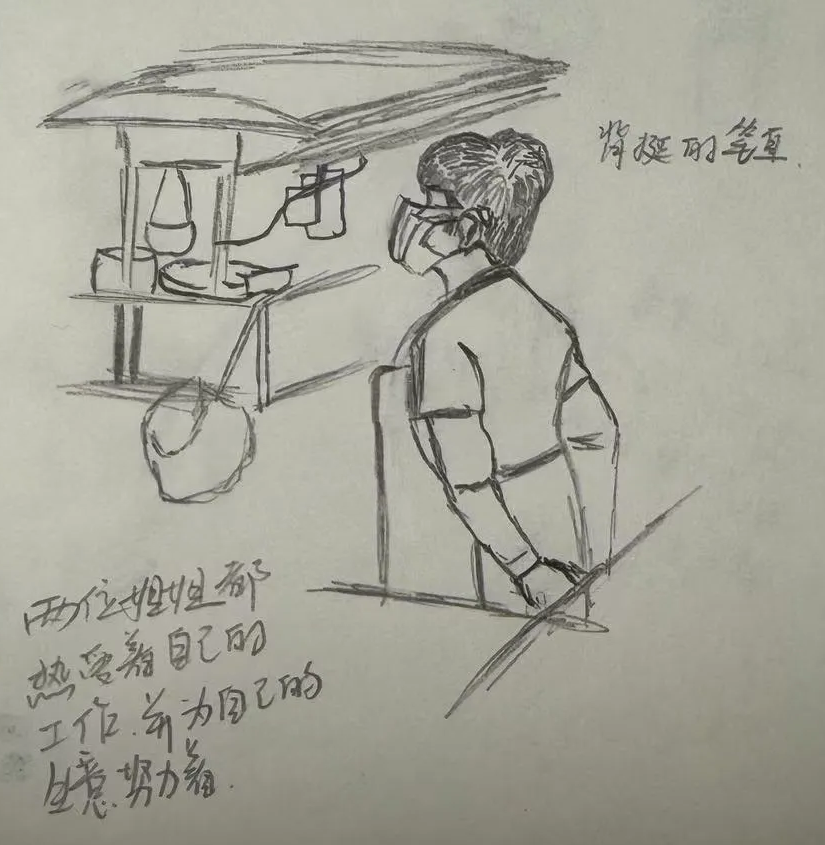
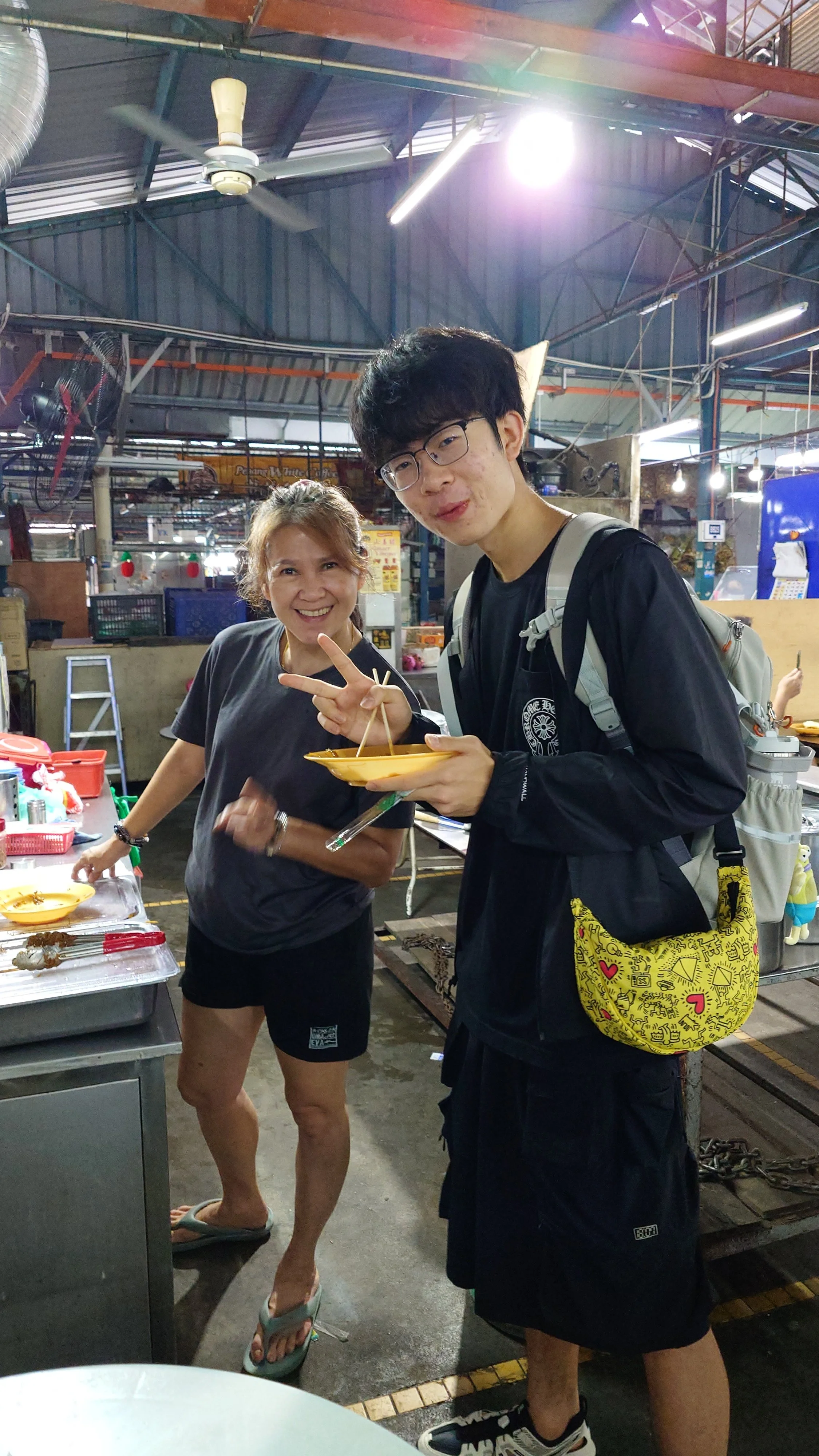
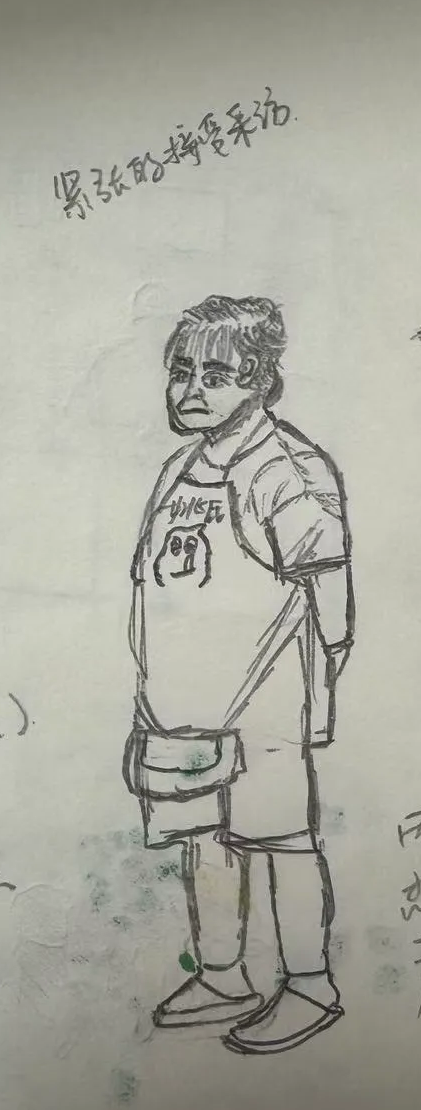
Some of my favorite drawings from the trip are the portraits of vendors.
Beside one, I wrote that her back was perfectly straight. Below it, I noted that the two women loved their work and were working hard for their businesses. Reading that now, I can see how much my attention had shifted toward the people behind the meals.
I couldn’t know everything about their lives from a short visit. What I could do was spend some time watching, talk with them, and record what stood out to me. Their posture, clothes, and small working spaces became part of how I remembered the encounter.
There are plenty of things my notebook doesn’t explain. Some conversations needed follow-up questions that I didn’t ask. Some notes are too short to be very useful now. I also have drawings of objects whose significance I still don’t fully understand.
But going through these pages, I can see myself learning to look beyond the dish in front of me. I became more interested in why it had a particular name, who was making it, and how the place selling it worked.
The pile of noodles is still one of the simplest drawings in my notebook. I’m glad I drew it, though. It reminds me of the stall, the proprietor, and the conversation about Fujian. It also reminds me how much I could miss if I only paid attention to what I was eating.